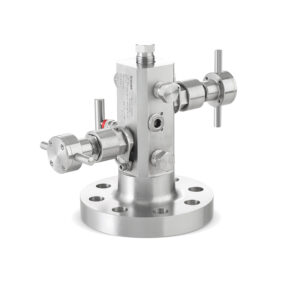
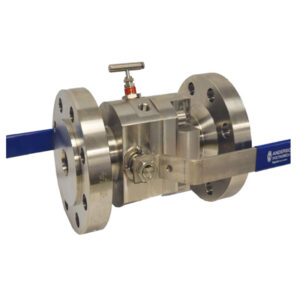
Endress+Hauser – Differential Pressure
$1.00

Differential pressure (dp) measurement is widely used to measure level in pressurized and vacuum tanks. However, traditional dp measurement using impulse lines and capillaries has its drawbacks in terms of accuracy and total cost of ownership.
The problems often encountered with conventional dp systems that use impulse lines include clogging, icing, leaks and condensation. Even those dp systems that use oil-filled capillaries face issues in applications with changing ambient temperatures.
Additional information
| Manufacturer | Endress+Hauser |
|---|---|
| Industry | Chemical and Petrochemical, Food and Beverage, Life Science, Oil and Gas, Power and Energy, Water and Wastewater |
| Segment | Instrumentation and Automation |


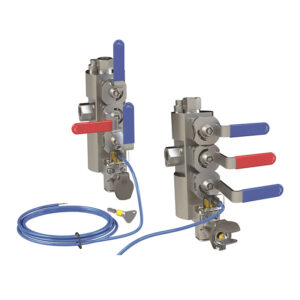
Endress+Hauser – Differential Pressure
Differential pressure (dp) measurement is widely used to measure level in pressurized and vacuum tanks. However, traditional dp measurement using impulse lines and capillaries has its drawbacks in terms of accuracy and total cost of ownership.
The problems often encountered with conventional dp systems that use impulse lines include clogging, icing, leaks and condensation. Even those dp systems that use oil-filled capillaries face issues in applications with changing ambient temperatures.
PRODUCT DESCRIPTION:
Differential pressure (dp) measurement is widely used to measure level in pressurized and vacuum tanks. However, traditional dp measurement using impulse lines and capillaries has its drawbacks in terms of accuracy and total cost of ownership.
The problems often encountered with conventional dp systems that use impulse lines include clogging, icing, leaks and condensation. Even those dp systems that use oil-filled capillaries face issues in applications with changing ambient temperatures.